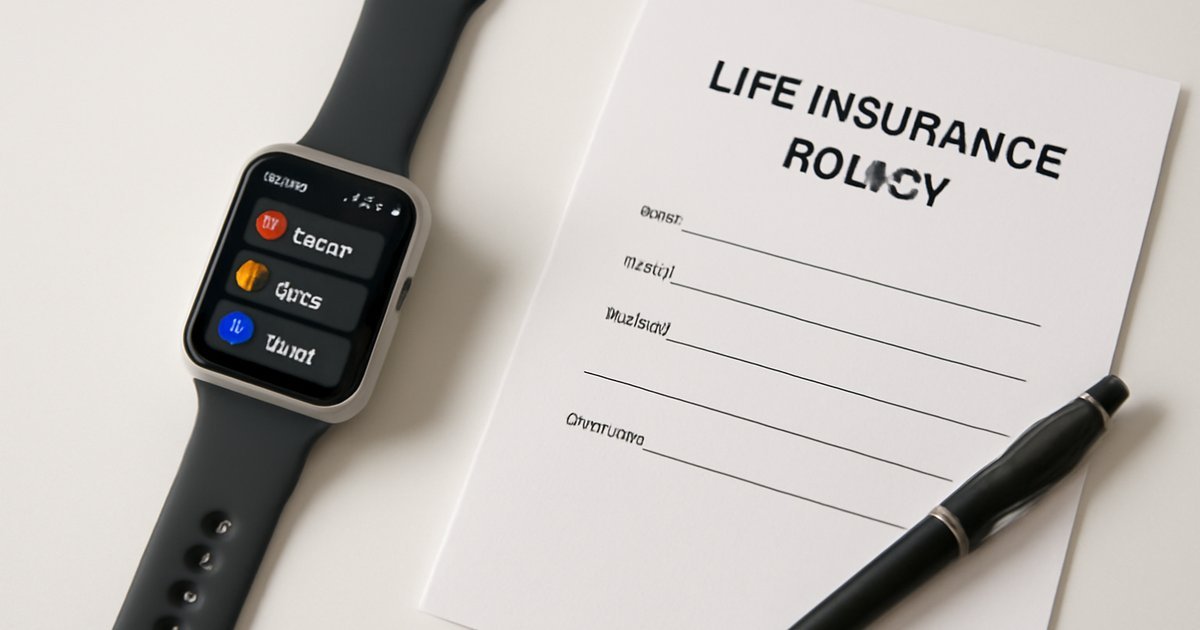
Your smartwatch might be doing more than counting steps — it could be reshaping how insurers calculate your life insurance premiums.
If you own a fitness tracker or smartwatch, you already know it monitors your heart rate, sleep patterns, daily steps, and sometimes even your blood oxygen levels. But here’s something millions of Americans are only beginning to realize: that same data is becoming a powerful currency in the life insurance industry.
According to a 2025 Accenture report, over 60% of US life insurers are now actively investing in wearable data integration programs — a dramatic jump from just 18% in 2019. This isn’t a distant future trend. It’s happening right now, and whether you benefit from it or get left behind depends largely on how well you understand the system.
This article explains exactly how wearable technology and life insurance intersect, what data insurers collect and why, how fitness tracking can lower (or raise) your premiums, and what privacy trade-offs you’re making when you opt into these programs. By the end, you’ll know whether sharing your health data with an insurer is actually worth it.
What Is Wearable-Linked Life Insurance?
Wearable-linked life insurance — sometimes called data-driven life insurance or behavioral underwriting — is a model where insurers use real-time health data from devices like the Apple Watch, Fitbit, Garmin, or WHOOP to adjust or reward policyholders based on lifestyle habits.
Traditional life insurance underwriting relies on snapshots: a one-time medical exam, your age, your family history, and answers to a questionnaire. That approach essentially freezes a picture of your health at a single moment in time and prices your policy around it for decades.
Wearable-linked programs flip that model. Instead of a one-time snapshot, they use longitudinal health data — meaning ongoing streams of behavioral information — to create a dynamic risk profile. Think of it as moving from a photograph to a live video feed of your health.
Major insurers including John Hancock (through its Vitality program), Manulife, and AIA have already deployed these programs at scale. John Hancock’s Vitality platform, for example, rewards policyholders with points for hitting daily step goals, which can translate into premium discounts, Amazon gift cards, or Apple Watch credits.
According to IDC, the global market for insurance-linked wearable programs is projected to exceed $6.8 billion by 2027, driven heavily by adoption in the United States and the United Kingdom.
How Fitness Trackers Feed Into Insurance Underwriting
Understanding what data flows where — and how it influences pricing — is essential before you opt into any program.
The data types most commonly collected include:
- Step count and daily activity levels — The most common metric. Insurers typically reward consistent movement above 7,000–10,000 steps per day.
- Resting heart rate — A strong predictor of cardiovascular health. Lower resting heart rates often correlate with reduced mortality risk.
- Sleep duration and quality — Poor sleep is linked to heart disease, diabetes, and mental health conditions — all factors insurers care about.
- Heart rate variability (HRV) — A more advanced metric gaining traction, HRV measures the variation in time between heartbeats and is considered a strong indicator of overall stress and autonomic nervous system health.
- Blood oxygen saturation (SpO2) — Tracked by newer devices, this data is increasingly relevant for flagging respiratory conditions.
- Workout frequency and intensity — Whether you log structured exercise sessions matters as much as passive movement.
In most opt-in programs, this data flows from your device’s companion app (Apple Health, Fitbit app, Garmin Connect) through a third-party health data aggregator — often a company like Human API or Validic — and then to your insurer’s underwriting or wellness platform.
A 2024 study published in the Journal of Risk and Insurance found that policyholders who consistently met activity benchmarks showed a 14% lower all-cause mortality rate over a seven-year follow-up period compared to sedentary policyholders — which is exactly the kind of actuarial signal that justifies premium discounts.
Pros and Cons of Sharing Your Fitness Data With Insurers
This is where things get genuinely complex. The benefits are real, but so are the risks — and most opt-in marketing materials conveniently downplay the latter.
Pros:
- Premium discounts and rewards — John Hancock Vitality participants can save up to 15% annually on premiums. Over a 20-year term policy, that adds up to thousands of dollars.
- Simplified underwriting — Some programs use wearable data to reduce or eliminate the need for a traditional medical exam. This is a significant benefit for people who are healthy but have medical exam anxiety or time constraints.
- Behavioral nudges toward better health — The gamification built into these programs genuinely motivates some users. A 2025 RAND Corporation study found that wearable wellness program participants increased their weekly physical activity by an average of 34 minutes compared to non-participants.
- Dynamic premium adjustments — Unlike static policies, some programs allow your rates to improve over time as you demonstrate healthier habits, rather than locking you into your 2026 health profile forever.
Cons:
- Data privacy and security exposure — Once your biometric data enters an insurer’s ecosystem, your control over it becomes limited. Data breaches at health data aggregators have already exposed millions of records, and insurance data is a high-value target for hackers. For context, consider reading about Identity Threat Detection and Response to understand how your personal health data can be weaponized if it falls into the wrong hands.
- Risk of adverse data use — While current regulations like HIPAA and state insurance codes place limits on how health data can be used, the regulatory framework hasn’t fully caught up to behavioral underwriting. There are real concerns that poor sleep data or low activity levels could eventually be used against policyholders at renewal.
- Device dependency and gaming — Your coverage incentives become tied to device performance. A dead battery, a device upgrade, or app permission changes can accidentally interrupt your data stream and disrupt your reward status.
- Surveillance creep — Opting into a wellness program today may normalize an expectation of continuous health monitoring. What starts voluntary can become an industry standard that disadvantages those who don’t participate.
Best Use Cases: Who Should Consider a Wearable-Linked Life Insurance Plan?
Not everyone benefits equally from these programs. Here’s how to self-identify:
You’re a strong candidate if:
- You already wear a fitness tracker daily and consistently hit activity goals. If you’re already generating the data, you might as well be rewarded for it.
- You’re in your 30s or 40s, relatively healthy, and looking for a new term life policy. The premium discount potential is highest when your baseline health is good and you have decades of coverage ahead.
- You dislike traditional medical exams. Several wearable-linked programs offer streamlined or exam-free underwriting for applicants with strong activity profiles.
- You’re a freelancer or self-employed professional who manages costs carefully. The annual savings on premiums can be a meaningful budget line item when you’re paying out of pocket for all your insurance needs. Tools like accounting software for small businesses can help you track and optimize insurance costs as a business expense.
You should think twice if:
- You have a health condition that limits your activity levels. These programs are structured around movement benchmarks that may be genuinely unachievable due to disability, chronic illness, or injury.
- You have serious privacy concerns. If the idea of your insurer having access to your resting heart rate and sleep patterns feels invasive, that instinct is worth honoring.
- You live in a state with limited regulatory oversight of behavioral underwriting. Always check your state insurance commissioner’s guidance before opting in.
Pricing: What Wearable-Linked Programs Actually Cost and Save
Let’s look at concrete numbers, because this decision ultimately comes down to dollars.
John Hancock Vitality (most widely available in the US):
- Program fee: Typically $2–$4 per month added to your premium
- Potential savings: Up to 15% annual premium reduction at Platinum status
- Apple Watch offer: You can get an Apple Watch for as little as $25 upfront if you meet activity goals in the first two years
- Rewards include: Amazon gift cards, Hyatt hotel discounts, Vitamix discounts, REI rewards
What the math looks like: On a $500,000 20-year term policy for a healthy 35-year-old male, average premiums run around $35–$45 per month in 2026. A 15% discount translates to roughly $63–$81 saved annually — or $1,260–$1,620 over the full term. That’s before adding the device subsidies and retail rewards.
However, if you rarely hit activity targets, you’ll pay the program fee with no offsetting discount — effectively making your policy slightly more expensive. Read the program terms carefully before enrolling.
Alternatives to Consider
Wearable-linked life insurance isn’t the only path to affordable coverage. Here are three solid alternatives:
1. Ladder Life
A purely digital life insurance platform that uses algorithmic underwriting without requiring wearable data. You apply entirely online, often skip the medical exam for policies under $3 million, and can adjust coverage up or down as your needs change. Best for people who want tech-driven simplicity without biometric data sharing. For more context on how digital insurance platforms work, see our guide on Life Insurance Claims Technology.
2. Haven Life (backed by MassMutual)
Another fully digital term life platform with competitive pricing and a clean user experience. Haven Life Plus includes perks like an online will tool and health coaching, but doesn’t require continuous fitness tracking. A strong choice if you want digital convenience without behavioral monitoring.
3. Traditional medically underwritten term life
For people with excellent health and high coverage needs, a traditional medical exam can actually unlock the lowest available rates — often lower than wearable-program participants achieve even at maximum discount tiers. Banner Life, Pacific Life, and Protective Life are consistently rated strong options for competitive term pricing in 2026.
Frequently Asked Questions
Can my insurer cancel or raise my premiums if my fitness data looks bad?
In most current US programs, no — at least not during your active policy term. Wearable data in opt-in wellness programs is primarily used to calculate reward eligibility, not to increase your premiums. However, the regulatory landscape is evolving. At renewal, some programs may factor in your historical wellness data. Always read your specific policy terms and state regulations.
What happens if I lose or break my fitness tracker?
Most programs have grace periods (typically 30–60 days) during which you won’t lose your reward status. Extended gaps in data may reset your activity tier, so notify your insurer immediately if you have a prolonged device issue.
Is my fitness data protected under HIPAA?
This is a critical nuance: data generated by consumer wearables and flowing through commercial wellness platforms is often not covered by HIPAA in the same way clinical health records are. HIPAA applies to covered entities like healthcare providers and their business associates. Your Fitbit or Apple Watch data shared with an insurer wellness platform may fall outside traditional HIPAA protections, depending on the data pathway. Read the privacy policy carefully.
Do all life insurers offer wearable programs?
No. As of 2026, wearable-linked programs remain opt-in features offered by a subset of carriers. John Hancock is the largest US-based life insurer with a comprehensive wearable program. Other carriers are piloting programs, but broad industry adoption hasn’t arrived yet.
Can I game the system by handing my tracker to someone more active?
Technically possible, but it violates policy terms and constitutes insurance fraud. Some programs are beginning to cross-reference device data with GPS location patterns and other behavioral signals to detect anomalies. It’s not worth the legal and financial risk.
Conclusion: Is Wearable-Linked Life Insurance Worth It?
If you’re already an active person with a fitness tracker on your wrist, wearable-linked life insurance programs offer a genuinely compelling value proposition. The premium discounts are real, the device subsidies add tangible value, and the behavioral incentives may actually improve your long-term health outcomes.
But go in with clear eyes. The privacy trade-offs are significant and the regulatory framework is still catching up to the technology. Before you opt in, read the data-sharing terms, understand what happens to your data if you cancel the policy, and verify your state’s consumer protections around behavioral underwriting.
Your next step: if you’re shopping for a new term life policy in 2026, request quotes from both a wearable-program insurer (John Hancock Vitality) and a traditional digital platform (Ladder or Haven Life) so you can compare apples to apples. The right answer depends on your activity level, privacy comfort, and coverage needs — not on a one-size-fits-all recommendation.