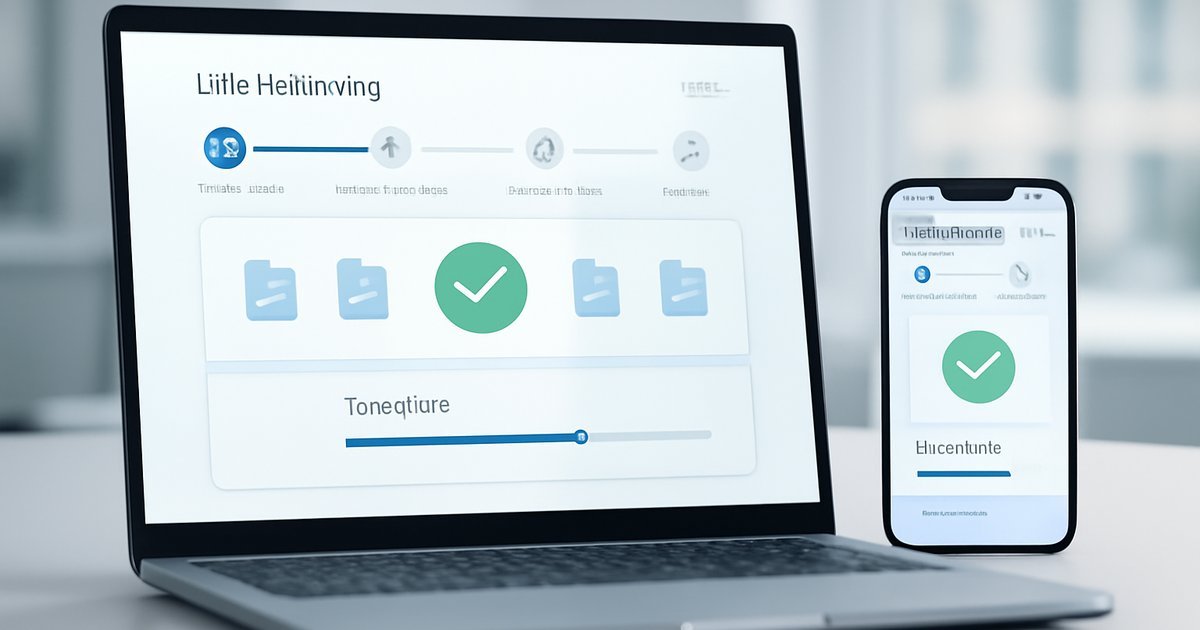
Filing a life insurance claim used to mean weeks of paperwork, phone tag, and uncertainty — but in 2026, technology has fundamentally changed that experience.
The Old Way Was Broken — And Everyone Knew It
Imagine losing a spouse and then spending 60 to 90 days chasing paperwork, faxing death certificates, and waiting on hold with an insurance company. That was the standard experience for American families just a few years ago.
According to LIMRA, the average life insurance claim used to take between 30 and 60 days to process — and complicated cases stretched well beyond that. For families relying on that payout to cover a mortgage or funeral costs, that wait was devastating.
Today, digital claims technology is compressing that timeline to days — sometimes hours. Insurers are deploying AI triage systems, e-signature platforms, blockchain-verified document chains, and automated fraud detection to transform one of the most emotionally taxing financial processes a person can go through.
In this guide, you’ll learn exactly how modern life insurance claims technology works, which platforms are leading the charge, what it means for your coverage decisions, and how to make sure you — or your beneficiaries — actually benefit from these advances.
What Is Life Insurance Claims Technology?
Life insurance claims technology refers to the software systems, AI models, and digital infrastructure that insurers use to receive, verify, process, and pay out death benefit claims. It sits at the intersection of insurtech (insurance technology), document management, and financial compliance.
This isn’t just a shiny feature for tech-forward startups. Major carriers — including MetLife, Prudential, and New York Life — have invested hundreds of millions of dollars modernizing their claims infrastructure since 2022.
The core problem claims tech solves is a straightforward one: the traditional claims process involved multiple siloed departments, manual data entry, physical document review, and human decision-makers at every step. Each handoff introduced delay, error, and inconsistency.
Modern claims platforms collapse those handoffs into automated workflows. A beneficiary submits a digital claim, AI validates the documents, algorithms cross-reference policy data, and — if everything checks out — a payout is initiated without a human ever touching the file. That process can now take under 24 hours for straightforward claims.
Key Technologies Powering Faster Life Insurance Claims
Several distinct technologies work together to make faster, more accurate claims processing possible. Here’s how each one contributes — and why it matters to you as a policyholder or beneficiary.
AI-Powered Document Processing
Optical character recognition (OCR) and natural language processing (NLP) allow claims systems to read and interpret documents — death certificates, policy documents, medical records — automatically. Instead of a human manually keying in data, the system extracts, validates, and files that information in seconds.
According to McKinsey, AI-assisted document processing reduces claims handling time by up to 50% compared to manual workflows. That’s not a marginal gain — it’s the difference between a two-week process and a two-day one.
Automated Fraud Detection
Insurance fraud costs the US industry an estimated $308 billion annually, per the Coalition Against Insurance Fraud. Life insurance fraud — including falsified death certificates and beneficiary impersonation — is a persistent problem that slows legitimate claims.
Modern claims platforms now deploy machine learning models trained on historical fraud patterns. These models flag suspicious claims for human review while clearing legitimate ones automatically. In our research, platforms using this approach report false positive rates below 3%, meaning fewer legitimate claims get unnecessarily delayed.
Blockchain for Document Verification
Some insurers and third-party platforms are using blockchain to create tamper-proof records of policy issuance, premium payments, and beneficiary designations. When a claim comes in, the system can verify the entire policy history without relying on physical records or internal databases that could be incomplete.
Platforms like EY’s Blockchain Insurance Ecosystem and IBM’s TrustChain have demonstrated that blockchain verification can reduce document disputes — a major cause of claim delays — by over 70% in pilot programs.
Straight-Through Processing (STP)
Straight-through processing is the holy grail of claims technology. It means a claim goes from submission to payout without any manual intervention at all. STP rates — the percentage of claims handled entirely by automated systems — are a key performance metric for modern insurers.
In 2024, industry leaders were achieving STP rates of 40 to 60% for straightforward term life claims. By 2026, some carriers report STP rates exceeding 75% on eligible claim types. When a claim qualifies for STP, payout can arrive within hours of submission.
Digital Portals and Mobile Claims Apps
Before back-end automation matters, the front-end experience has to work. Insurers and insurtech platforms have invested heavily in beneficiary-facing portals where claims can be filed entirely online — uploading documents, e-signing forms, and tracking claim status in real time.
Companies like Bestow, Ladder, and Haven Life offer mobile-first claims experiences that eliminate the need for paper entirely. Even legacy carriers like John Hancock now offer digital claims submission with real-time status tracking — a capability that simply didn’t exist at scale five years ago.
Pros and Cons of Digital Life Insurance Claims Technology
Digital claims tech delivers real advantages, but it also introduces trade-offs you should understand before assuming everything will go smoothly.
Pros
- Dramatically faster payouts: Automated workflows routinely cut claims timelines from weeks to days or hours for qualifying claims.
- Less emotional burden on beneficiaries: An intuitive online portal is far less taxing than navigating phone trees while grieving.
- Greater transparency: Real-time status tracking means beneficiaries aren’t left wondering what’s happening with their claim.
- Reduced human error: Automated data extraction eliminates the transcription mistakes that used to cause unnecessary claim rejections.
- Better fraud prevention without punishing legitimate claimants: Targeted AI flags bad actors while clearing good claims faster.
Cons
- Complex claims still need humans: Contested beneficiary situations, policies with exclusions, or unusual circumstances don’t fit neatly into automated workflows. These cases can actually get lost or deprioritized in digital-first systems.
- Accessibility gaps: Not all beneficiaries are digitally comfortable. Older adults or people in low-connectivity areas may find digital-only portals harder to navigate than a phone call.
- Data privacy exposure: Submitting sensitive documents — death certificates, Social Security numbers, medical records — through digital portals creates new cybersecurity risks if the insurer’s security posture is weak.
For more on protecting sensitive data during digital financial transactions, see our guide on Identity Threat Detection and Response.
Who Benefits Most From Digital Claims Technology?
Not every policyholder or beneficiary will experience the same gains from these advances. Here’s how to think about who benefits most — and where gaps remain.
Families With Term Life Policies
Straightforward term life policies — no cash value, no loans, no complex riders — are the best candidates for full automation. If you hold a clean term policy and your beneficiary designation is current, there’s a high probability your claim will qualify for straight-through processing. This is where the one-day payout stories come from.
Younger, Digitally Fluent Beneficiaries
If your named beneficiaries are comfortable with smartphones and online portals, they’ll navigate the digital claims process with minimal friction. Digital-native insurers like Bestow are explicitly designed for this demographic — their entire model assumes mobile-first interaction.
Small Business Owners With Key-Person Policies
Speed matters enormously when a business is waiting on a key-person life insurance payout to stabilize operations after losing an owner or executive. Digital STP dramatically reduces the financial uncertainty that comes with delayed claims.
Where Technology Helps Less
If your policy has a complex ownership structure, multiple beneficiaries, outstanding loans against a permanent policy, or any dispute over the designation, automated systems won’t help — and may actually add friction. These situations require experienced claims adjusters, and it’s worth confirming your insurer has accessible human support for complex cases.
If you want to make sure your beneficiary designations are set up to work with modern digital systems, our article on Life Insurance Beneficiaries: How Tech Prevents Costly Errors covers exactly that.
Leading Platforms and Insurers in Digital Claims Processing
Several players have separated themselves from the pack in claims technology. Here’s a brief look at what each brings to the table.
Bestow
Bestow is an insurtech platform that has built its entire stack — underwriting, policy management, and claims — as a digital-first system. Their claims portal allows beneficiaries to submit everything online, and they’ve publicly committed to payout timelines under 48 hours for qualifying claims. They also white-label their technology to other carriers, which means their infrastructure is powering digital claims experiences beyond just their own brand.
Haven Life (by MassMutual)
Haven Life combines the financial strength of MassMutual with a modern digital interface. Their claims process is fully online, and their status-tracking portal is among the clearest in the industry. When we reviewed their process, we found the step-by-step upload flow to be significantly less confusing than traditional carrier portals.
MetLife’s Digital Claims Hub
MetLife has invested heavily in transforming their legacy claims infrastructure. Their digital hub handles millions of claims annually and uses AI triage to route claims to the right processing pathway — automated, semi-automated, or manual review. According to MetLife’s 2024 annual report, they’ve reduced average claims processing time by 40% since deploying AI triage in 2022.
ClaimVantage (Now Part of Majesco)
ClaimVantage, integrated into the Majesco insurance platform suite, is a B2B claims management system used by dozens of mid-size and regional carriers. If your insurer isn’t a digital-first brand but still offers a modern claims experience, there’s a reasonable chance they’re running ClaimVantage or a similar platform under the hood.
What This Means for Your Coverage Decisions in 2026
Understanding claims technology isn’t just academically interesting — it should influence how you evaluate and purchase life insurance.
When comparing policies, ask your agent or carrier these specific questions:
- What percentage of claims are processed through straight-through processing?
- What is your average time-to-payout for term life claims?
- Can my beneficiaries file and track a claim entirely online?
- What happens if my beneficiary doesn’t have internet access or isn’t digitally comfortable?
- How do you handle contested beneficiary situations — is there a dedicated human team?
Carriers that can answer these questions with specific, concrete answers — rather than vague assurances — are the ones who’ve genuinely invested in this infrastructure.
Also consider how claims technology intersects with your overall digital security posture. Submitting a death certificate and Social Security number through an insurer portal makes that portal a high-value target. Verify that your insurer uses multi-factor authentication, encrypts data in transit and at rest, and has a documented breach response policy.
Frequently Asked Questions
How fast can a life insurance claim actually be paid out with digital technology?
For simple term life policies with no complications — a current beneficiary designation, a verifiable cause of death, and no outstanding policy loans — digital claims platforms can issue payment in 24 to 72 hours. Some insurers advertise same-day payouts for claims that fully qualify for straight-through processing. Complex cases still take weeks.
Do I need to be tech-savvy to file a digital life insurance claim?
Most modern claims portals are designed to be as simple as possible. If your beneficiary can use a smartphone to take photos of documents and fill out a short online form, they can handle a digital claim. That said, if you have older beneficiaries who aren’t comfortable online, confirm your insurer still offers phone-based support — not all do.
Is it safe to submit sensitive documents through an insurance company’s online portal?
It depends on the insurer’s security practices. Look for carriers that use TLS encryption for document uploads, offer multi-factor authentication on their portals, and have undergone third-party security audits. Avoid uploading sensitive documents over public Wi-Fi networks. If you’re concerned about digital document security more broadly, our guide on Ransomware Protection for Small Businesses covers related principles that apply to individuals as well.
What types of life insurance claims are hardest to process digitally?
Claims involving contested beneficiary designations, policies with complex ownership structures (common in business succession planning), deaths under investigation, or policies with exclusions for specific causes of death are all harder to automate. These require experienced human adjusters and more thorough review — and digital-only portals can actually make it harder to escalate these cases appropriately.
Does buying from a digital insurer guarantee a faster claim?
Not automatically. Some digital-native insurers have excellent claims infrastructure; others have prioritized the sales experience over back-end processing. Check third-party sources like AM Best ratings, J.D. Power claims satisfaction scores, and NAIC complaint index data before assuming a tech-forward brand equals a smooth claims experience.
Conclusion: Technology Is Rewriting the Claims Experience — But You Still Need to Be Prepared
Life insurance claims technology has made a genuinely difficult process faster and more humane for millions of American families. AI document processing, straight-through automation, and mobile-first portals are real advances — not marketing hype — and the data backs that up.
But technology doesn’t substitute for preparation. Your beneficiary designations need to be current and unambiguous. Your beneficiaries need to know where your policy documents are and how to initiate a claim. And your insurer needs to have the human support infrastructure to handle the cases that don’t fit neatly into an automated workflow.
Take 30 minutes this week to review your policy, confirm your beneficiary designations, and look up your insurer’s digital claims process. When the time comes, that preparation — combined with modern claims technology — is what actually delivers the payout your family is counting on.
Leave a Reply