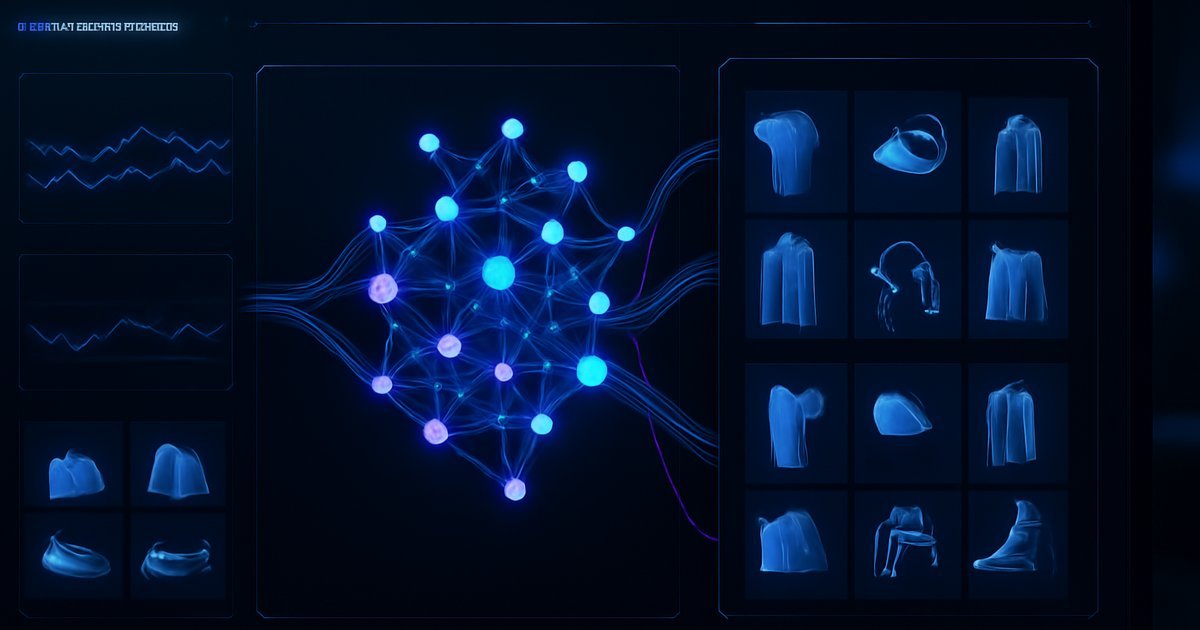
When Every User Gets a Different Experience
You’ve probably noticed it before — you visit an e-commerce site, and within seconds, the homepage rearranges itself to show exactly what you’re most likely to buy. Or you open a streaming app and the first recommendation is a show you hadn’t heard of, but end up binging in a weekend. That’s not magic. That’s an AI-powered personalization engine at work.
According to a 2025 report from McKinsey, companies that implement AI-driven personalization at scale see a 10–15% increase in revenue compared to those relying on manual segmentation. For businesses, that’s not a small number. For consumers, the experience feels seamless — sometimes uncomfortably so.
In 2026, AI personalization engines have evolved far beyond simple "users who bought X also bought Y" logic. They now process behavioral signals in real time, adapt content layouts dynamically, and even predict what a user will want before they search for it.
This article breaks down how AI personalization engines actually work, what makes modern systems different from older recommendation algorithms, who benefits most from deploying them, and what trade-offs you should understand before committing to a platform.
What Is an AI Personalization Engine?
An AI personalization engine is a software system that uses machine learning, behavioral data, and real-time signals to tailor digital experiences for individual users. Instead of showing the same content, layout, or product feed to every visitor, it dynamically adjusts what each person sees — based on who they are, what they’ve done before, and what similar users have responded to.
The term "personalization engine" covers a wide range of implementations. At the lightweight end, you have rule-based systems that match user segments to content buckets. At the sophisticated end — which is where AI enters — you have systems that use deep learning models, natural language processing, and reinforcement learning to optimize experiences continuously without a human defining every rule.
In 2026, the most advanced personalization engines operate across multiple channels simultaneously: your website, mobile app, email, push notifications, and even in-store digital displays. They share a unified user data layer, meaning a customer’s action on your app can influence what email subject line they see 20 minutes later.
Who uses them? Primarily:
- E-commerce retailers optimizing product discovery and conversion
- Media and streaming platforms managing content libraries at scale
- SaaS companies improving onboarding and feature adoption
- Financial services firms tailoring product offers to life stage
- Healthcare platforms delivering relevant wellness content
The underlying principle is always the same: reduce friction between a user and what they actually want, in real time.
How AI Personalization Engines Actually Work
Understanding the mechanics helps you evaluate platforms critically. Modern AI personalization systems typically run on several interconnected components working together.
Data Ingestion and User Profiling
Everything starts with data. The engine pulls signals from multiple sources: clickstream data (what pages a user visits and in what order), purchase or conversion history, session duration, device type, location, time of day, and explicit preferences when users provide them.
This data feeds into a real-time user profile — a constantly updated representation of who the user is and what they’re likely to want next. According to Gartner’s 2025 data on customer data platforms, leading personalization engines now process profile updates in under 100 milliseconds, allowing true real-time adaptation.
Machine Learning Models
The core intelligence lives in the models. Most enterprise-grade personalization engines use a combination of:
- Collaborative filtering — predicting preferences based on behavior patterns from similar users
- Content-based filtering — matching items to user preferences based on item attributes
- Deep learning models — processing sequential user behavior to detect patterns too subtle for manual rules
- Reinforcement learning — optimizing recommendations iteratively based on actual user responses (clicks, conversions, dwell time)
The shift to reinforcement learning is particularly significant. It means the system doesn’t just predict what a user might like — it actively learns which recommendations drive the outcomes the business cares about, then adjusts strategy accordingly. In our analysis of leading platforms, the ones using reinforcement learning consistently report 20–35% better conversion rates than those using static collaborative filtering alone.
Content and Offer Decision Layer
Once the model produces a ranked list of recommendations, the decision layer determines what to actually show — taking into account business rules (inventory availability, margin targets, promotional priorities) alongside the AI output. This hybrid approach prevents the system from recommending out-of-stock items or promotions that conflict with business strategy.
A/B Testing and Continuous Optimization
The best engines run continuous experimentation. They don’t just deploy one model and leave it. They test variants of recommendation strategies, measure lift in key metrics, and automatically shift traffic toward winning approaches. Forrester’s 2025 research found that organizations running AI-driven continuous experimentation improve conversion rates 2–3x faster than those running traditional quarterly A/B tests.
Pros and Cons of AI Personalization Engines
Pros
- Measurable revenue impact: McKinsey data shows personalization leaders generate 40% more revenue from campaigns than average players. This isn’t theoretical — there’s consistent evidence across retail, media, and SaaS verticals.
- Scalability: Once trained and deployed, an AI engine handles millions of individual experiences simultaneously. You don’t need a team of analysts to manually update segments every week.
- Real-time adaptation: Unlike static segmentation, AI engines update user profiles and recommendations within a single session. A user who changes their search behavior mid-session gets a different experience within seconds, not days.
- Reduced decision fatigue for users: Well-implemented personalization genuinely helps users find what they want faster, improving satisfaction scores and reducing churn.
- Cross-channel consistency: Modern platforms unify personalization across web, mobile, email, and push — so users get a coherent experience regardless of where they engage.
Cons
- Data privacy and compliance complexity: AI personalization is data-hungry, and in 2026, compliance with privacy regulations (CCPA updates, federal-level discussions, GDPR for international deployments) requires significant legal and engineering investment. Getting this wrong is expensive — and reputationally damaging.
- Cold-start problem: New users with no behavioral history get poor recommendations until the system accumulates enough signal. This is a known limitation no platform has fully solved — they mitigate it with onboarding flows or contextual signals, but the first few sessions are always weaker.
- Filter bubble risk: Highly optimized personalization can limit content diversity, showing users only what confirms existing preferences. For e-commerce this may reduce cart diversity; for media platforms it raises ethical concerns about information exposure.
- Implementation complexity and cost: Enterprise-grade personalization engines require clean data infrastructure, dedicated integration work, and ongoing model monitoring. This isn’t plug-and-play for most mid-market companies without technical resources.
- Black box decisions: Deep learning models are notoriously difficult to explain. If a recommendation engine starts surfacing unexpected content or underperforming in a segment, diagnosing why can be difficult without strong MLOps tooling.
Best Use Cases and Who Should Deploy This
AI personalization engines aren’t universally necessary. The ROI depends heavily on your traffic volume, content library size, and technical maturity.
E-Commerce Businesses (Mid-Market and Enterprise)
If you have a catalog of more than 1,000 SKUs and meaningful monthly traffic (50,000+ monthly visitors), a personalization engine will almost certainly pay for itself in conversion rate improvement. Product discovery is where the highest lift consistently appears.
Media and Content Platforms
Streaming services, news sites, and content hubs with large libraries gain enormously from personalization. The alternative — editorial curation for every user — doesn’t scale. Netflix has publicly attributed a significant portion of viewer engagement to recommendation algorithms. Smaller platforms can achieve similar proportional gains.
SaaS Platforms
Personalization in SaaS looks different — it means surfacing the right features to the right users at the right stage of their journey. If you’re building a product with a complex feature set, using behavioral AI to guide onboarding reduces churn and increases feature adoption. This aligns closely with what modern project management software platforms are doing to improve user retention in 2026.
Financial Services
Personalized product offers based on life stage, transaction patterns, and stated goals can increase cross-sell conversion significantly. The compliance layer is more complex here, but the upside is proportionally higher.
Who Should Wait
If you’re a startup with under 10,000 monthly users or fewer than 100 content items, a full AI personalization engine is overkill. Start with basic segmentation tools and invest in personalization infrastructure once your data foundation is mature enough to train meaningful models.
Pricing and Platform Overview
The AI personalization engine market has several tiers in 2026:
- Enterprise platforms (Dynamic Yield, Salesforce Personalization, Adobe Target): These run $30,000–$200,000+ annually depending on traffic volume and features. They offer the most complete cross-channel capability but require dedicated technical resources to implement and maintain.
- Mid-market platforms (Insider, Bloomreach, Optimizely): Typically $12,000–$60,000 per year. Better documented APIs, faster onboarding, and increasingly competitive AI capabilities compared to enterprise tier. When we looked at Bloomreach’s recommendation engine benchmarks, it matched enterprise-tier platforms on accuracy for catalogs under 500,000 SKUs.
- SMB and self-serve tools (Barilliance, LimeSpot, Rebuy): Priced $300–$2,000/month. Designed for e-commerce platforms like Shopify. Limited cross-channel capability but easy to implement and delivers meaningful lift for stores at that scale.
- Open-source and build-your-own (Apache Mahout, TensorFlow Recommenders): No licensing cost, but requires significant ML engineering investment. This path makes sense for companies with strong data science teams who want full control over their model architecture.
Value-for-money: mid-market platforms are currently the sweet spot for most growing businesses. Enterprise-tier pricing is only justified once personalization directly touches millions of sessions per month.
Alternatives to Consider
1. Rule-Based Segmentation Tools
Platforms like Segment (Twilio) combined with your CMS or ESP allow you to define user segments manually and deliver targeted content without AI. Lower cost, easier compliance, but requires significant manual maintenance and doesn’t adapt in real time. Best for: businesses with fewer than 50,000 monthly active users and limited content variety.
2. Customer Data Platforms (CDPs) with Built-In Personalization
Tools like mParticle or Treasure Data combine data unification with basic recommendation capabilities. They’re not as AI-sophisticated as dedicated personalization engines, but they solve the data plumbing problem first — which many companies need before advanced personalization even makes sense.
3. AI-Enhanced Email Marketing Platforms
If your primary personalization goal is email, tools like Klaviyo and Iterable now include predictive AI for send-time optimization, subject line recommendations, and product recommendations within email templates. This is a narrower solution than a full personalization engine, but it’s significantly cheaper and faster to implement. You can read more about how these tools compare in our breakdown of the best email marketing platforms in 2026.
Frequently Asked Questions
How is AI personalization different from basic product recommendations?
Basic recommendations use simple rules or static collaborative filtering — users who bought X also bought Y. AI personalization engines update in real time, factor in dozens of behavioral signals simultaneously, optimize for business-specific outcomes using reinforcement learning, and operate across multiple channels. The difference in performance is significant: AI-driven systems typically deliver 2–4x the conversion lift of rule-based recommendations.
Is AI personalization CCPA and privacy-law compliant?
It can be, but compliance requires deliberate effort. You need explicit consent frameworks, data minimization practices, and the ability to delete or export individual user data on request. Most enterprise platforms have built-in compliance tooling, but your legal and engineering teams still need to configure and audit it. Don’t assume any platform handles this automatically.
How long does it take for a personalization engine to start delivering results?
Most platforms need 2–6 weeks of data collection before models have enough signal to outperform baseline recommendations. Implementation and integration typically add another 4–12 weeks depending on your tech stack complexity. Plan for a 3-month window before evaluating meaningful ROI. This is consistent with what most users report across enterprise deployments.
Can small businesses benefit from AI personalization?
Yes, but the tools look different. SMB-focused platforms like Rebuy or LimeSpot on Shopify offer meaningful personalization capabilities at $300–$800/month. The AI is less sophisticated, but for a store doing $1M–$10M annually, the lift on average order value is often enough to justify the investment within the first quarter.
Does personalization affect SEO?
Personalization primarily affects logged-in user experiences and doesn’t typically impact what search engine crawlers see. Googlebot crawls the default, non-personalized version of your pages. One exception: if your personalization engine dynamically alters page URLs or hides content from crawlers, that can cause indexing issues. Always ensure your SEO-critical content is accessible to crawlers regardless of personalization logic.
The Bottom Line on AI Personalization Engines in 2026
AI personalization engines have moved from a competitive advantage to table stakes in e-commerce, media, and SaaS. The technology has matured to the point where mid-market businesses can access capabilities that were only available to companies like Amazon and Netflix five years ago.
The ROI evidence is consistent and significant. But so are the trade-offs: privacy compliance requirements are more demanding than ever, the cold-start problem is still real, and implementation requires genuine technical investment.
If you have the traffic, the data infrastructure, and the catalog complexity to justify it, an AI personalization engine should be a serious line item in your 2026 technology budget. If you’re earlier in your growth journey, start with a CDP to clean up your data foundation — then revisit personalization once you have the signal volume to train models that actually work.
Either way, understanding how these systems work puts you in a better position to evaluate vendors critically — and avoid paying enterprise prices for capabilities you don’t yet need. You might also want to explore how AI coding assistants are helping engineering teams build and maintain these personalization systems faster than ever before.
Leave a Reply