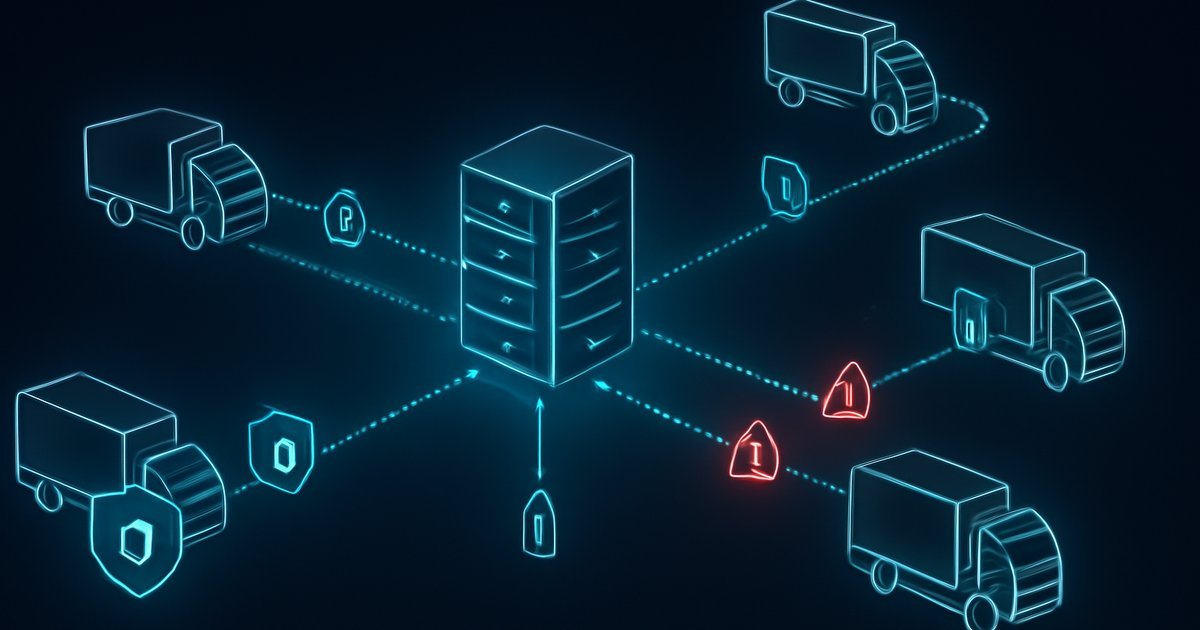
When Your Vendor Becomes Your Biggest Security Risk
You’ve patched every server, trained your employees on phishing, and invested in a solid firewall. But have you thought about the software your payroll provider uses? Or the firmware running on the network switches your IT vendor installed last quarter?
Supply chain cyberattacks are now one of the leading causes of enterprise data breaches in the United States. According to Gartner, by 2025, 45% of organizations worldwide had experienced a software supply chain attack — and that number has continued climbing into 2026. The infamous SolarWinds incident was a wake-up call: attackers didn’t breach SolarWinds’ customers directly. They compromised a trusted software update and let it do the work for them.
In this guide, you’ll learn exactly what supply chain cybersecurity means, how these attacks happen, and — most importantly — what practical steps you can take right now to reduce your exposure. Whether you run a small business or manage IT for a mid-sized enterprise, this article gives you the framework to protect your organization from threats you can’t fully control.
What Is Supply Chain Cybersecurity?
Supply chain cybersecurity refers to the set of practices, tools, and policies designed to protect your organization from threats that enter through third-party vendors, software providers, hardware manufacturers, and service partners.
Think of your digital supply chain like a physical one. You trust the ingredients your supplier ships to your factory. But if one supplier is compromised — contaminated goods, mislabeled components — the problem flows downstream to your finished product. The same logic applies in tech: if a vendor’s software library, API, or hardware component contains malicious code or a vulnerability, your systems inherit that risk the moment you integrate it.
In 2026, this threat surface has expanded dramatically. Cloud-native architectures, open-source dependencies, managed service providers (MSPs), and AI-integrated platforms all add new links to the chain — each one a potential entry point for attackers.
The term "software bill of materials" (SBOM) — essentially an ingredient list for every piece of software — has become a standard requirement for federal contractors and is quickly becoming best practice across industries. The U.S. Cybersecurity and Infrastructure Security Agency (CISA) has published detailed guidance on SBOM adoption as a foundational supply chain defense.
How Supply Chain Attacks Actually Work
Understanding attack mechanics helps you build smarter defenses. Supply chain attacks generally fall into four categories:
- Software update poisoning: Attackers compromise a software vendor’s update mechanism. When you install a legitimate-looking update, you’re actually deploying malware. This is what happened with SolarWinds’ Orion platform in late 2020.
- Open-source dependency hijacking: Developers rely on thousands of open-source packages. Attackers publish malicious versions of popular libraries (typosquatting) or compromise existing maintainers’ accounts to inject backdoors.
- Compromised MSPs: Managed service providers often have privileged access to dozens or hundreds of client networks. Breaching one MSP can give attackers a master key to multiple organizations simultaneously.
- Hardware tampering: Less common but severe — implanting malicious chips or firmware at the manufacturing or shipping stage. The U.S. Department of Homeland Security has flagged this as a persistent concern for critical infrastructure.
A 2026 report from Forrester found that MSP-related breaches now account for nearly 1 in 5 enterprise cybersecurity incidents in North America — a figure that should alarm any company relying on outsourced IT management.
Pros and Cons of Current Supply Chain Security Approaches
No single solution eliminates supply chain risk. Here’s an honest look at what’s working — and where gaps remain:
What’s Working
- SBOM adoption: Having a complete inventory of software components lets security teams identify vulnerable dependencies quickly when a new CVE (Common Vulnerabilities and Exposures entry) drops. Organizations using SBOMs reported 30% faster patch response times, according to a 2025 IDC survey.
- Vendor risk management platforms: Tools like SecurityScorecard, BitSight, and ProcessUnity give you continuous visibility into your vendors’ security posture using outside-in scanning — no access to their internal systems required.
- Zero Trust Architecture: Limiting the blast radius of a compromised vendor by enforcing least-privilege access means even a breached third party can only reach what it absolutely needs. (For a deep dive on Zero Trust, see our guide on Zero Trust Network Access (ZTNA): The Complete Guide for 2026.)
Where Gaps Remain
- Visibility into fourth-party risk: Your vendor’s vendor is almost impossible to assess at scale. Most organizations have no automated visibility beyond their direct suppliers.
- Open-source governance: The average enterprise application relies on hundreds of open-source libraries. Keeping track of every dependency update, license change, and security flag manually is not realistic without dedicated tooling.
- False confidence in certifications: A vendor holding a SOC 2 Type II certification doesn’t mean they’re immune to supply chain attacks — it means their internal controls passed an audit. SolarWinds was a widely trusted, certified vendor.
Best Use Cases: Who Needs This Most?
Supply chain cybersecurity isn’t just an enterprise concern. Here’s how exposure varies across organization types:
Small Businesses (1-50 employees)
You’re unlikely to have a dedicated security team, but you almost certainly rely on SaaS platforms, payroll processors, e-commerce plugins, and cloud-based tools. Your risk is concentrated in software dependencies and MSPs. Focus on vetting the security practices of your top 5-10 vendors and enabling MFA everywhere.
Mid-Sized Companies (50-500 employees)
You likely have a mix of custom software and vendor integrations, plus an internal IT team or MSP. This is where formal vendor risk management programs start delivering clear ROI. Prioritizing SBOM adoption and third-party access reviews will close significant gaps.
Enterprises and Federal Contractors
You’re already subject to regulations like NIST SP 800-161r1 (supply chain risk management), CMMC (Cybersecurity Maturity Model Certification), and, if you handle federal software, Executive Order 14028 requirements around SBOMs. Automated vendor risk platforms and dedicated supply chain security teams are not optional at this scale.
Software Developers and DevOps Teams
If your team builds software, your own product becomes part of someone else’s supply chain. Secure development practices — dependency scanning, code signing, reproducible builds, and secrets management — are essential to avoid becoming the next attack vector for your customers.
Practical Steps to Strengthen Your Supply Chain Security Right Now
Here’s a prioritized, actionable framework you can start implementing today:
- Inventory your vendors and their access levels. Build a complete list of every third party that has access to your systems, data, or networks. Assign a risk tier based on access sensitivity.
- Require SBOMs from software vendors. For any critical software you procure, ask vendors for an SBOM. This is increasingly standard practice and many vendors already have them available.
- Deploy a vendor risk management (VRM) platform. Tools like SecurityScorecard or Panorays continuously monitor your vendors’ security posture and alert you to changes — like a new critical CVE in their infrastructure.
- Implement least-privilege access for all third parties. Vendors should only access the systems and data they absolutely need to do their job. Review and revoke unnecessary permissions quarterly.
- Monitor for dependency vulnerabilities in your own software. If you build software, integrate tools like Snyk, Dependabot, or OWASP Dependency-Check into your CI/CD pipeline to flag vulnerable open-source components before they ship.
- Include supply chain scenarios in your incident response plan. Most IR playbooks focus on direct attacks. Add specific runbooks for scenarios like "critical SaaS vendor breach" or "compromised MSP." For a broader look at incident response, our guide on Cloud Disaster Recovery in 2026: Best Strategies & Tools covers related planning frameworks.
- Conduct annual vendor security assessments. Send security questionnaires (based on SIG Lite or CAIQ frameworks) to your highest-risk vendors and follow up on any gaps.
Key Tools for Supply Chain Security in 2026
The market for supply chain security tools has matured significantly. Here are the categories worth evaluating:
- Vendor Risk Management Platforms: SecurityScorecard, BitSight, Panorays, ProcessUnity — provide continuous external monitoring and risk scoring for your vendor ecosystem.
- Software Composition Analysis (SCA) Tools: Snyk, Black Duck, Checkmarx SCA, FOSSA — scan your codebase and dependencies for known vulnerabilities and license compliance issues.
- SBOM Generation Tools: Syft, CycloneDX, SPDX-compliant tools — generate and maintain software bills of materials for your own products and for vendors that provide them.
- Privileged Access Management (PAM): CyberArk, BeyondTrust, Delinea — control, monitor, and audit every privileged session, including those initiated by third-party vendors.
- AI-Powered Threat Intelligence: Platforms leveraging AI to detect anomalous behavior in third-party integrations are becoming standard for mid-market and enterprise security operations. These tools can flag unusual data access patterns from a vendor’s API credentials before a full breach occurs.
According to Statista, the global supply chain security market is projected to exceed $4.5 billion by 2027, driven largely by regulatory mandates and the rising cost of third-party-related breaches.
Pricing and Investment: What to Budget
Costs vary widely based on organization size and the maturity of your security program:
- Basic VRM platforms (e.g., SecurityScorecard Essentials): Starting around $15,000–$25,000 per year for small vendor portfolios.
- Mid-tier SCA tools (e.g., Snyk Team): $98–$300 per developer per month, depending on features and team size.
- Enterprise VRM and PAM suites: $75,000–$300,000+ annually for full-featured platforms with deep integrations and dedicated support.
- DIY approaches: Open-source tools like Syft (SBOM), OWASP Dependency-Check, and free tiers of Dependabot provide meaningful protection at low cost — but require internal expertise to operationalize.
For most small businesses, a combination of free/low-cost dependency scanning tools and a formal vendor questionnaire process delivers strong value before committing to enterprise platforms. For organizations with 50+ vendors or complex software supply chains, a dedicated VRM platform pays for itself in breach prevention within one to two years.
Alternatives and Complementary Frameworks
Supply chain security doesn’t operate in isolation. These complementary approaches strengthen your overall posture:
- NIST SP 800-161r1: The definitive U.S. government framework for supply chain risk management. Even if you’re not a federal contractor, it’s the most comprehensive public guidance available and worth adapting for private-sector use.
- ISO/IEC 27036: An international standard specifically addressing information security for supplier relationships — useful for organizations with global vendor ecosystems.
- CIS Controls v8 (Control 15): The Center for Internet Security’s Control 15 covers service provider management and offers practical, implementation-ready guidance at every maturity level.
These frameworks complement technical tools and help you build a defensible, documented security program — which matters both for regulatory compliance and cyber insurance underwriting.
Frequently Asked Questions
What is the most common type of supply chain cyberattack in 2026?
Software dependency attacks — where malicious code is injected into open-source libraries or software updates — remain the most prevalent. Attackers target the development pipeline because a single compromised package can affect thousands of downstream organizations simultaneously.
How do I know if my vendor has been breached?
This is one of the hardest challenges in supply chain security. Vendor risk management platforms that continuously monitor external-facing infrastructure can surface signals like newly exposed credentials, changes in SSL configuration, or dark web mentions. Beyond tooling, contractual breach notification clauses — requiring vendors to notify you within 24-72 hours of a confirmed incident — are essential.
Is supply chain security only relevant to large enterprises?
No. Small businesses are frequently targeted precisely because attackers know they have weaker vendor oversight. If you use a payroll platform, a POS system, or any SaaS tool that touches customer data, you have supply chain risk. The scale of your program should match your size, but the mindset applies universally.
What is an SBOM and do I actually need one?
A Software Bill of Materials (SBOM) is a structured list of every component — libraries, dependencies, modules — that makes up a piece of software. If you develop software, you should generate SBOMs for your own products. If you procure software, requesting SBOMs from vendors lets you quickly identify whether you’re affected when a critical vulnerability is disclosed in a common library.
How does Zero Trust help with supply chain attacks?
Zero Trust Architecture limits the damage a compromised vendor can do by enforcing strict identity verification and least-privilege access for every user and system — including third parties. Even if an attacker gains a vendor’s credentials, they can only access what that vendor was explicitly permitted to reach. This dramatically reduces lateral movement and blast radius. Learn more in our Zero Trust Network Access (ZTNA) guide.
The Bottom Line: Your Perimeter Now Includes Everyone You Trust
Supply chain cybersecurity is one of the most complex and underestimated challenges in technology today. You can have excellent internal security and still suffer a catastrophic breach because of a vendor you trusted for years.
The good news is that practical defenses are available at every budget level. Start by mapping your vendor landscape, demanding SBOMs from critical software providers, enforcing least-privilege access, and integrating dependency scanning into your development workflow.
The organizations that get ahead of supply chain risk in 2026 won’t just avoid breaches — they’ll also build the vendor trust and compliance posture that wins enterprise contracts and keeps cyber insurance premiums manageable. Your security is only as strong as the weakest link in your chain. It’s time to find out where yours are.