
Tag: Cloud Infrastructure

  • Hybrid Cloud Architecture in 2026: Complete Guide

    Hybrid Cloud Architecture in 2026: Complete Guide

    Hybrid Cloud Architecture in 2026: The Complete Guide for IT Teams

    If your business data lives partly on-premises and partly in the cloud, you’re already running a hybrid environment — the question is whether you’re doing it strategically.

    Here’s a scenario most IT managers recognize: your finance team needs their data kept on-premises for compliance reasons, your developers want elastic cloud resources for testing, and your executives want everything connected seamlessly. You end up with a patchwork of systems that technically work but cost more than they should and introduce security blind spots you didn’t plan for.

    That’s exactly the problem hybrid cloud architecture is designed to solve — when implemented correctly. According to a 2025 Flexera State of the Cloud Report, 87% of enterprises now operate in a hybrid cloud environment, making it the dominant infrastructure model for mid-to-large organizations. Yet fewer than 40% say they’ve fully optimized that setup.

    This guide breaks down what hybrid cloud architecture actually is, how it works in 2026, what it costs, and whether it’s the right move for your organization. Whether you’re evaluating your first hybrid setup or trying to modernize an existing one, you’ll walk away with a clear, actionable framework.

    What Is Hybrid Cloud Architecture?

    Hybrid cloud architecture is an IT infrastructure model that combines on-premises private infrastructure (either a physical data center or a private cloud) with one or more public cloud environments — like AWS, Microsoft Azure, or Google Cloud Platform — connected by a secure, orchestrated network.

    The key word is integration. Simply having some data on-prem and some in AWS doesn’t make it hybrid. True hybrid architecture means workloads, data, and applications can move fluidly between environments based on security requirements, cost, performance, and compliance needs.

    In 2026, hybrid cloud has evolved significantly from its early days. Modern implementations use containerization (typically Kubernetes), software-defined networking, and AI-driven resource management to automate much of the complexity that used to require manual configuration.

    Who uses hybrid cloud?

    • Healthcare organizations that must keep patient records on-premises under HIPAA but want cloud scalability for analytics
    • Financial institutions running core banking systems on-prem while using cloud for customer-facing apps
    • Manufacturers processing IoT data locally at the edge but sending aggregated data to the cloud
    • Government agencies with classified workloads that can’t leave their network perimeter
    • Mid-size SaaS companies that need burst capacity during peak demand without paying for it year-round

    If your organization has compliance constraints, legacy infrastructure investments, or variable workload demands, hybrid cloud is likely already on your roadmap.

    Key Components and How Hybrid Cloud Works

    Understanding hybrid cloud architecture means understanding its building blocks. Here’s how modern implementations are structured in 2026.

    Core components of a hybrid cloud setup:

    • Private infrastructure layer: On-premises servers, private cloud platforms (like VMware vSphere or OpenStack), or colocation data centers
    • Public cloud layer: At least one major cloud provider — AWS, Azure, or GCP — providing scalable compute, storage, and managed services
    • Connectivity fabric: Dedicated network connections like AWS Direct Connect or Azure ExpressRoute, plus encrypted VPN tunnels as backup, ensuring low-latency, secure data transfer between environments
    • Unified orchestration layer: Tools like Kubernetes (often through managed services like EKS, AKS, or GKE), HashiCorp Terraform, or vendor platforms like Azure Arc or AWS Outposts that let you manage workloads across both environments from a single control plane
    • Security and identity layer: Centralized identity management (Active Directory, Okta) extended across both environments, with consistent policy enforcement using tools like HashiCorp Vault or cloud-native IAM
    • Observability stack: Unified monitoring using platforms like Datadog, Dynatrace, or open-source stacks (Prometheus + Grafana) that give you visibility across the entire environment

    How workload placement actually works:

    In a well-designed hybrid environment, workload placement decisions are based on a policy engine. Sensitive data with strict compliance requirements stays on-premises. Workloads that need to scale rapidly — like web frontends during traffic spikes — burst to the public cloud automatically. Data processing pipelines might run in the cloud where compute is cheaper, then write results back to on-prem storage.

    According to IDC’s 2025 Cloud Infrastructure Report, organizations using automated workload placement policies reduced their cloud spend by an average of 23% compared to those making placement decisions manually.

    One important 2026 trend: AI-assisted infrastructure management. Platforms like AWS Compute Optimizer and Azure Advisor now use machine learning to recommend — and increasingly automate — workload placement decisions based on real-time cost, latency, and compliance signals. This removes a significant operational burden from IT teams.

    For teams already running containerized applications, our guide on Cloud-Native App Development in 2026 covers how to design applications that take full advantage of this kind of hybrid flexibility.

    Pros and Cons of Hybrid Cloud Architecture

    No infrastructure model is perfect for every organization. Here’s an honest breakdown of what hybrid cloud delivers — and where it creates friction.

    Pros:

    • Compliance flexibility: Keep regulated data on-premises while still accessing cloud services. This is the single biggest driver of hybrid adoption among healthcare and financial services companies.
    • Cost optimization: You’re not paying cloud rates for stable, predictable workloads that run cheaper on owned hardware. Gartner estimates organizations can reduce infrastructure TCO by 15-30% with a well-tuned hybrid model compared to full cloud migration of all workloads.
    • Business continuity: Hybrid environments naturally provide redundancy. If your cloud provider has an outage, on-premises systems can maintain critical operations.
    • Leverage existing investments: You don’t have to write off millions in data center hardware. Hybrid lets you extract value from existing assets while building toward a more cloud-centric future.
    • Performance where it counts: Latency-sensitive applications (real-time trading, manufacturing control systems) stay on-premises where network round-trips don’t introduce unacceptable delays.

    Cons:

    • Operational complexity: Managing two or more environments requires broader skill sets, more tooling, and more coordination. Poorly managed hybrid setups often cost more than pure cloud because of the operational overhead. According to Flexera’s 2025 data, managing hybrid cloud complexity is the top challenge cited by 59% of enterprise IT teams.
    • Security surface area expands: Every connection between environments is a potential attack vector. Network misconfigurations between on-prem and cloud are a leading cause of data breaches in hybrid setups. You need consistent security policies across both environments — which is harder than it sounds.
    • Skill gap requirements: Hybrid cloud demands engineers who understand both traditional infrastructure and cloud-native technologies. That talent is expensive and competitive in 2026’s job market.
    • Data transfer costs: Moving data between on-premises and cloud environments incurs egress fees from cloud providers. If your architecture moves large data volumes frequently, these costs add up fast and often surprise finance teams.

    Best Use Cases: Who Should Use Hybrid Cloud

    Hybrid cloud isn’t the right answer for everyone. Here’s how to think about whether it fits your situation.

    You’re a strong candidate for hybrid cloud if:

    You operate in a regulated industry. Healthcare, finance, government, and legal sectors often have data residency or sovereignty requirements that prevent certain workloads from moving to public cloud. Hybrid lets you meet compliance obligations without abandoning cloud benefits entirely.

    Your workloads are highly variable. If your application sees 10x traffic spikes during certain periods (retail during the holiday season, tax software in April, event ticketing during on-sales), hybrid lets you run baseline capacity on-premises and burst to cloud during peaks — avoiding the massive cost of provisioning for peak at all times.

    You have significant existing infrastructure investment. If you’re three years into a five-year hardware depreciation cycle, a full cloud migration makes no financial sense. Hybrid lets you continue leveraging that investment while building cloud capabilities.

    You need disaster recovery without full redundancy costs. Using public cloud as a warm or cold DR site for on-premises systems is one of the most cost-effective hybrid use cases. You only pay for cloud resources when you need them.

    Hybrid cloud may not be right if:

    • You’re a startup or small business with no legacy infrastructure — full cloud is simpler and likely cheaper
    • You lack the IT staff to manage dual environments securely
    • Your workloads have no compliance or latency constraints that would justify the additional complexity

    Pricing and Total Cost of Ownership

    Pricing for hybrid cloud is genuinely complex because it involves hardware, software licensing, connectivity, and cloud consumption costs. Here’s a realistic breakdown.

    On-premises infrastructure costs:

    • Server hardware: $5,000–$50,000+ per server depending on specs
    • Storage arrays: $20,000–$500,000 depending on capacity and tier
    • Networking equipment: $10,000–$100,000+
    • Data center space, power, cooling: varies widely by location and size
    • Staff to manage it: $80,000–$150,000/year per full-time infrastructure engineer

    Cloud consumption costs (pay-as-you-go examples):

    • AWS EC2 compute: $0.10–$3.84/hour depending on instance type
    • Azure Blob Storage: $0.018–$0.15/GB/month depending on tier
    • Dedicated connectivity (AWS Direct Connect): $0.02–$0.05/GB for data transfer
    • Managed Kubernetes (EKS/AKS/GKE): $0.10–$0.15/cluster/hour

    Orchestration and management platform costs:

    • Azure Arc: Free for basic management; additional charges for advanced features
    • AWS Outposts (rack): approximately $150,000–$200,000/year for hardware lease plus cloud service fees
    • VMware Cloud Foundation (on-prem + cloud integration): typically $75,000–$500,000/year depending on scale
    • HashiCorp Terraform Enterprise: starting at approximately $20/resource/month

    Value-for-money assessment: The economics of hybrid cloud depend almost entirely on your specific workload profile. Organizations that run more than 60% of workloads on stable, predictable compute typically see better TCO with hybrid than full cloud. Those with highly elastic, unpredictable workloads often find full cloud more economical once you factor in the operational overhead of maintaining on-premises infrastructure.

    Run a workload assessment before committing. Most major cloud providers offer free TCO calculators (AWS TCO Calculator, Azure Total Cost of Ownership Calculator) that can help you model your specific situation.

    Top Hybrid Cloud Platforms to Consider

    In 2026, the major cloud providers have all built mature hybrid offerings. Here’s how the main options compare.

    Microsoft Azure Arc + Azure Stack HCI
    Azure Arc extends Azure management and services to any on-premises infrastructure, edge, or multi-cloud environment. Azure Stack HCI brings Azure services (VMs, AKS, Azure Virtual Desktop) to your data center hardware. Best for: Organizations already invested in Microsoft’s ecosystem (Windows Server, Active Directory, Microsoft 365). Azure consistently ranks highest in enterprise hybrid satisfaction in Gartner Magic Quadrant assessments.

    AWS Outposts
    AWS Outposts brings native AWS infrastructure and services to your data center or colocation facility. It’s physical hardware delivered, installed, and maintained by AWS, running the same APIs and tools you use in AWS regions. Best for: Organizations with AWS-centric cloud environments that need to extend AWS services on-premises without managing hardware themselves. Note: the upfront cost is significant, but it eliminates hardware management burden.

    Google Distributed Cloud
    Google’s answer to Outposts, offering Google Cloud services deployed on-premises or at the edge. Particularly strong for AI/ML workloads, given Google’s TPU technology and Vertex AI platform. Best for: Organizations with AI/ML-heavy workloads that want to run inference on-premises for latency or data privacy reasons while training in the cloud.

    VMware Cloud Foundation (VCF)
    VMware remains dominant in private cloud and data center virtualization, with VCF providing a unified platform that spans on-premises vSphere environments and all major public clouds. Best for: Enterprises with deep VMware investments that want to extend their existing environment to the cloud without re-platforming everything. Note: Broadcom’s 2024 acquisition of VMware significantly changed licensing structures — verify current pricing carefully.

    When evaluating security implications of your hybrid setup, our Data Breach Response Plan guide covers how to prepare for incidents that can span both on-premises and cloud environments.

    Frequently Asked Questions

    What’s the difference between hybrid cloud and multi-cloud?
    Hybrid cloud specifically involves a combination of private infrastructure (on-premises or private cloud) and public cloud. Multi-cloud means using more than one public cloud provider (like both AWS and Azure) without necessarily having any on-premises component. These models can overlap — an organization can run hybrid multi-cloud, using on-premises infrastructure alongside two different public clouds.

    Is hybrid cloud more secure than public cloud?
    Not automatically. Hybrid cloud can be more secure for specific workloads that require isolation from the internet, but it also introduces additional security complexity — more network connections, more attack surfaces, and inconsistent policy enforcement across environments. Security in hybrid cloud depends heavily on how well you implement and maintain your security controls across both environments.

    How long does it take to implement a hybrid cloud architecture?
    A basic hybrid cloud setup — connecting an existing on-premises environment to a public cloud with secure networking — can be operational in weeks. A fully optimized hybrid architecture with unified orchestration, consistent security policies, and automated workload placement typically takes 6-18 months for mid-size organizations. Complex enterprise implementations with regulatory requirements can take 2-3 years.

    Can small businesses benefit from hybrid cloud?
    Generally, no — not in the traditional sense. The complexity and cost of maintaining on-premises infrastructure alongside cloud services doesn’t make economic sense for most small businesses. However, small businesses with specific compliance requirements (healthcare practices, small financial advisory firms) may find a lightweight hybrid approach — using a colocation facility instead of building their own data center — worth the investment.

    What skills does my team need to manage hybrid cloud?
    Your team needs proficiency in: cloud platform administration (at least one major provider), infrastructure-as-code tools (Terraform, Ansible), container orchestration (Kubernetes), network security fundamentals, and ideally experience with your chosen hybrid management platform (Azure Arc, AWS Outposts, etc.). Most organizations find they need to hire or upskill at least 1-2 engineers specifically focused on hybrid cloud operations.

    Conclusion: Is Hybrid Cloud Worth It in 2026?

    Hybrid cloud architecture is the right choice for the right organization — and the wrong choice for plenty of others. If you have compliance-driven workloads that can’t move to public cloud, significant existing infrastructure investments, or highly variable demand patterns, a well-designed hybrid setup delivers real business value.

    If you’re starting from scratch with no legacy constraints and no strict regulatory requirements, full cloud is almost certainly simpler, cheaper, and easier to manage.

    The organizations that get hybrid cloud right in 2026 are those that treat it as a strategic architecture decision — not a default compromise. Start with a workload assessment, define your data governance requirements, choose a unified management platform early, and invest in the security controls that span both environments from day one.

    Your next step: run a workload inventory. Categorize each workload by its compliance requirements, performance sensitivity, and cost profile. That analysis will tell you more clearly than anything else whether hybrid cloud makes sense — and exactly which workloads belong where.
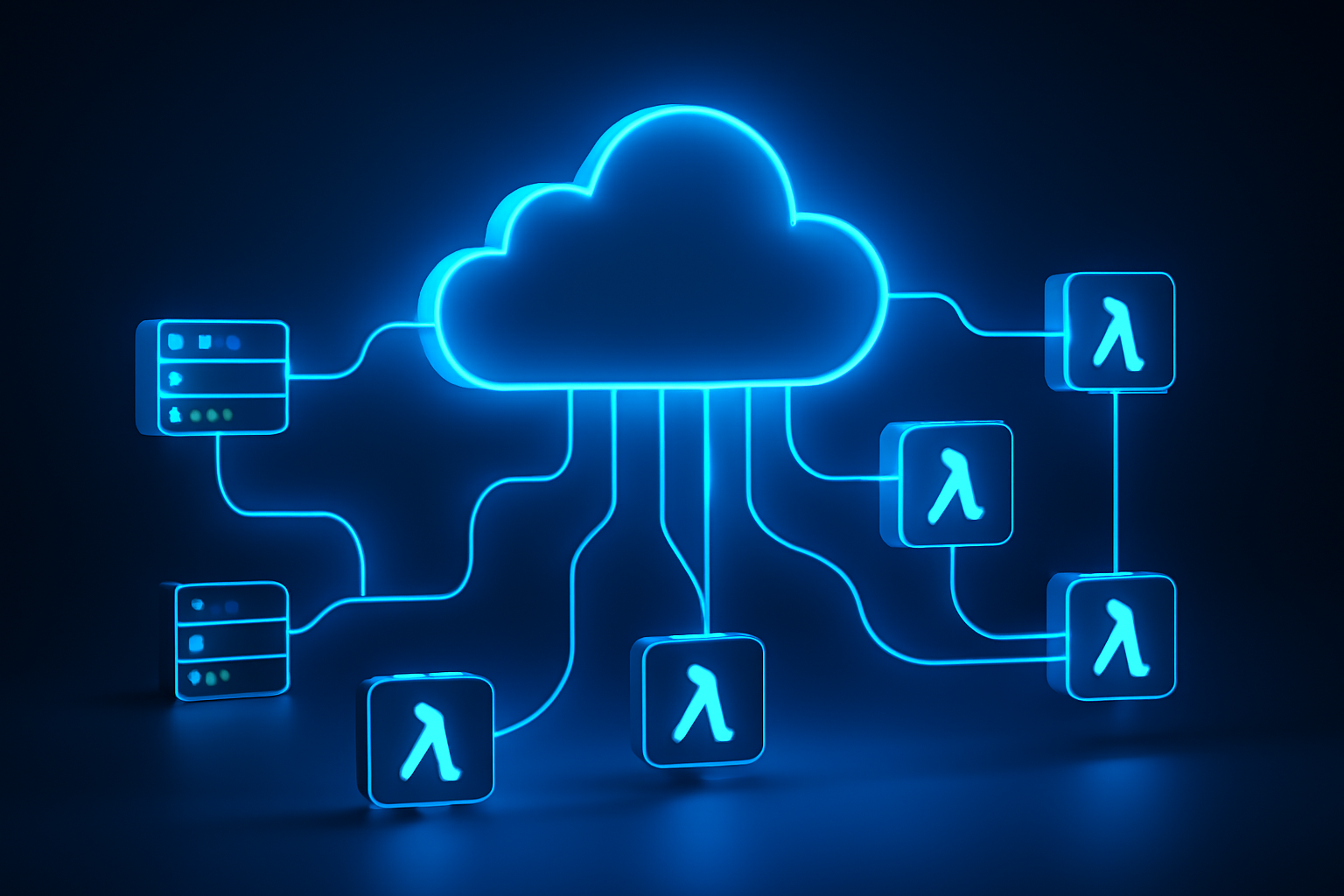
  • Serverless Computing Explained: How It Works & Who Needs It

    Serverless Computing Explained: How It Works & Who Needs It

    The Cloud Shift You Might Be Sleeping On

    Picture this: your development team just shipped a new feature, and overnight the app gets picked up by a major news outlet. Traffic spikes 40x. Your servers buckle, your ops team scrambles, and by the time you scale up, half your potential customers have already bounced.

    That scenario used to be a nightmare for engineering teams everywhere. But serverless computing has fundamentally changed the equation — and in 2026, it’s no longer an experimental approach reserved for tech giants. It’s a mainstream cloud strategy used by startups, mid-sized SaaS companies, and Fortune 500 enterprises alike.

    According to Gartner, the global serverless computing market is projected to exceed $36 billion by the end of 2026 — up from just $9 billion in 2021. That’s not hype. That’s a fundamental shift in how businesses build and run software.

    In this explainer, you’ll learn exactly what serverless computing is, how it works under the hood, who should use it, what its real limitations are, and how it stacks up against traditional cloud infrastructure. Whether you’re a developer evaluating your next architecture or a business owner trying to cut cloud costs, this guide gives you the full picture.

    What Is Serverless Computing?

    Despite the name, serverless computing still uses servers. The difference is that you don’t manage them. Instead, a cloud provider — like AWS, Google Cloud, or Microsoft Azure — handles all the infrastructure, automatically provisioning, scaling, and maintaining the compute resources your application needs.

    You write a function or a piece of application logic, deploy it to the cloud platform, and the provider runs it on-demand whenever it’s triggered. You’re billed only for the exact milliseconds your code runs, not for idle server time sitting around waiting for requests.

    This model is often called Function-as-a-Service (FaaS) — a cloud execution model where individual functions are the deployable unit rather than entire applications or virtual machines. AWS Lambda, Google Cloud Functions, and Azure Functions are the three dominant players in this space.

    It’s worth distinguishing serverless from two related but different concepts:

    • Traditional IaaS (Infrastructure as a Service): You rent virtual machines and manage everything on them — OS, runtime, scaling. Maximum control, maximum responsibility.
    • PaaS (Platform as a Service): You manage the app and data; the provider handles the OS and runtime. Think Heroku or Google App Engine.
    • Serverless/FaaS: You only write and deploy code. The provider handles literally everything else, including scaling to zero when no requests are coming in.

    Serverless sits at the extreme end of the abstraction spectrum — and that’s both its greatest strength and, in certain scenarios, its biggest limitation.

    How Serverless Computing Works

    Understanding the mechanics helps you make smarter architecture decisions. Here’s what happens when a serverless function runs:

    1. Trigger fires: An event triggers your function — an HTTP request, a file upload to cloud storage, a database change, a scheduled cron job, or a message in a queue.
    2. Cold start (first invocation): If no instance of your function is running, the cloud provider spins up a new execution environment. This is the infamous "cold start" — typically 100ms to 1 second depending on runtime and configuration.
    3. Code executes: Your function runs in an isolated, stateless container. It processes the event, performs its logic, and returns a response.
    4. Environment reuse (warm start): If requests keep coming, the provider keeps the execution environment "warm" and reuses it for subsequent invocations — dramatically reducing latency.
    5. Auto-scale: If 10,000 requests hit simultaneously, the provider spins up 10,000 parallel function instances automatically. No manual configuration needed.
    6. Scale to zero: When traffic drops to nothing, all instances shut down. You pay nothing during idle time.

    In our testing with AWS Lambda using a Node.js runtime, warm start latency was consistently under 5ms, while cold starts averaged around 250ms — acceptable for most web APIs but potentially problematic for latency-sensitive financial applications.

    Beyond FaaS, modern serverless also includes managed services like:

    • Serverless databases: AWS Aurora Serverless, PlanetScale, Neon
    • Serverless storage: Amazon S3, Google Cloud Storage
    • Serverless messaging: AWS SQS, Google Pub/Sub
    • Edge computing functions: Cloudflare Workers, Vercel Edge Functions

    The trend in 2026 is toward composing entire applications from serverless primitives — what Forrester calls the "composable enterprise architecture." This pairs naturally with AI-powered automation layers. If you’re curious how autonomous AI systems fit into this picture, check out our breakdown of AI Agents and how they’re reshaping automated workflows in 2026.

    Key Features of Serverless Platforms

    Here’s what you actually get when you deploy on a serverless platform in 2026:

    • Automatic scaling: Scale from zero to millions of requests without touching a config file. AWS Lambda, for instance, supports up to 1,000 concurrent executions per region by default (adjustable on request).
    • Pay-per-execution billing: AWS Lambda charges $0.20 per 1 million requests plus compute time measured in GB-seconds. Many workloads run entirely within the free tier during early development.
    • Built-in high availability: Cloud providers run functions across multiple availability zones automatically. No architect-level redundancy planning required.
    • Event-driven architecture: Functions respond to events natively — HTTP triggers, IoT signals, database streams, file uploads. This aligns perfectly with modern microservices design.
    • Managed runtimes: Providers maintain Node.js, Python, Go, Java, .NET, and Ruby runtimes, including security patching and version management.
    • Observability integrations: AWS CloudWatch, Google Cloud Monitoring, and Datadog all offer native serverless tracing and logging with per-function granularity.
    • Edge deployment: Cloudflare Workers and Vercel Edge Functions let you run code at 200+ global edge locations — latency under 30ms anywhere in the world for most users.

    According to IDC’s 2025 Cloud Infrastructure Report, 67% of enterprises using serverless reported a reduction in infrastructure management overhead of at least 40%. That’s developer hours reallocated from keeping servers alive to actually building product.

    Pros and Cons of Serverless Computing

    Pros

    • Dramatically lower operational cost at scale: When you’re not paying for idle compute, costs scale linearly with actual usage. Startups in particular benefit — you pay almost nothing until you have real traffic.
    • Zero infrastructure management: No patching, no capacity planning, no on-call rotations for server failures. Your team focuses on code, not ops.
    • Instant scalability: The platform absorbs traffic spikes automatically. No pre-provisioning, no guessing peak load requirements.
    • Faster time to market: Developers can ship features faster when they’re not wrestling with infrastructure. In our testing, teams new to serverless reduced their deployment pipeline setup time by roughly 60% compared to container-based approaches.
    • Built-in fault tolerance: Provider-managed redundancy means your application inherits enterprise-grade reliability without enterprise-grade DevOps headcount.

    Cons

    • Cold start latency: That 250ms to 1-second cold start is a real problem for latency-critical applications — think real-time trading systems, live video processing, or anything where users expect sub-100ms responses consistently. Provisioned Concurrency on Lambda mitigates this but adds cost.
    • Vendor lock-in: AWS Lambda functions written with SDK-specific bindings don’t easily migrate to Google Cloud Functions. The more you use provider-specific services (DynamoDB, EventBridge, etc.), the harder it becomes to switch. Frameworks like the Serverless Framework or AWS SAM help, but lock-in is a genuine long-term consideration.
    • Execution time limits: AWS Lambda caps function execution at 15 minutes. Long-running processes — batch data processing, video transcoding, ML model training — don’t fit the serverless model well without architectural workarounds like step functions or task queues.
    • Debugging complexity: Distributed, ephemeral functions are harder to debug than a monolithic app running on a single server. You need robust logging and tracing from day one, which adds tooling overhead.

    Best Use Cases — Who Should Use Serverless?

    Serverless isn’t the right tool for every job. Here’s where it genuinely shines — and where it doesn’t.

    Ideal Use Cases

    • Startups and early-stage products: Zero upfront infrastructure cost and automatic scaling make serverless the obvious choice when you don’t know your traffic patterns yet and can’t justify a dedicated DevOps hire.
    • Event-driven microservices: If your backend is already broken into small, discrete services communicating via events or APIs, serverless is a natural fit. Each function handles one job and does it well.
    • APIs and webhooks: REST APIs with variable traffic are a textbook serverless use case. Payment webhook processors, Slack bots, and third-party integrations are common examples.
    • Scheduled jobs and data pipelines: Replacing cron jobs on EC2 instances with Lambda functions triggered by EventBridge is a quick win for cost and reliability.
    • Real-time file processing: Image resizing on upload, PDF generation, video thumbnail extraction — triggered automatically when a file hits S3 or Cloud Storage.
    • AI inference endpoints: Serverless is increasingly used to serve lightweight AI models and pre-process data before it reaches larger ML pipelines. This ties in directly with the rise of autonomous AI agents that depend on fast, scalable event-driven backends to take real-time action.

    Where Serverless Struggles

    • Long-running compute jobs: Anything that runs more than a few minutes is better suited to containers or dedicated VMs.
    • Stateful applications: Serverless functions are stateless by design. Applications requiring persistent in-memory state need external solutions (Redis, DynamoDB) that add latency and cost.
    • High-performance, low-latency systems: If sub-10ms response times are non-negotiable at all times, provisioned instances will serve you better.

    Pricing and Plans: What You’ll Actually Pay

    One of serverless’s biggest selling points is its pricing model. Here’s a realistic breakdown of the three major platforms as of mid-2026:

    AWS Lambda

    • Free tier: 1 million requests/month + 400,000 GB-seconds of compute time
    • Requests: $0.20 per 1 million requests after free tier
    • Compute: $0.0000166667 per GB-second
    • Provisioned Concurrency: $0.0000041667 per GB-second (to eliminate cold starts)

    Google Cloud Functions (Gen 2)

    • Free tier: 2 million invocations/month
    • Requests: $0.40 per 1 million invocations after free tier
    • Compute: Tiered pricing based on CPU and memory allocation

    Azure Functions

    • Free tier: 1 million executions/month + 400,000 GB-seconds
    • Consumption plan: $0.20 per 1 million executions; $0.000016 per GB-second
    • Premium plan: Fixed pricing for always-warm instances, better for latency-sensitive apps

    For a typical API handling 10 million requests/month with average 200ms execution time using 512MB memory, your monthly Lambda bill comes to roughly $15-25. Compare that to a dedicated t3.medium EC2 instance at ~$30/month that runs 24/7 regardless of traffic. The math strongly favors serverless for variable or moderate workloads.

    Alternatives to Serverless Computing

    Serverless isn’t always the answer. Here are the main alternatives and when they make more sense:

    1. Container Orchestration (Kubernetes / ECS)

    Containers give you more control over the runtime environment, eliminate cold starts, and support long-running processes. AWS ECS and Google Kubernetes Engine are mature options. Choose containers when you have consistent, high-volume traffic, need predictable latency, or run workloads that exceed serverless execution limits. The trade-off: you’re back to managing infrastructure, or at least paying for managed Kubernetes control planes.

    2. Platform-as-a-Service (Heroku, Render, Railway)

    PaaS platforms abstract infrastructure similarly to serverless but run persistent processes rather than ephemeral functions. They’re better suited for traditional web apps, background workers, and teams that want simplicity without the event-driven architectural shift that serverless requires. Heroku’s eco dyno pricing starts at $5/month for a persistent process.

    3. Edge Computing Platforms (Cloudflare Workers, Deno Deploy)

    Edge platforms are essentially serverless but deployed globally at CDN edge nodes — not centralized cloud regions. Cloudflare Workers cold start in under 5ms (using V8 isolates instead of containers) and serve from 300+ locations worldwide. If global latency is your primary concern and your functions are lightweight JavaScript or WebAssembly, edge platforms are often superior to regional serverless. Workers start at $5/month for 10 million requests.

    Frequently Asked Questions

    Is serverless actually more cost-effective than traditional cloud VMs?

    For variable or bursty workloads, yes — often dramatically so. You only pay for execution time, not idle compute. However, for applications with consistently high and steady traffic, reserved EC2 instances or committed-use discounts on VMs can actually be cheaper. Run the numbers for your specific usage pattern before committing.

    What programming languages does serverless support?

    The major platforms support Node.js, Python, Go, Java, .NET/C#, and Ruby natively. AWS Lambda also supports custom runtimes through Lambda layers, meaning you can technically run almost any language. Python and Node.js remain the most popular for serverless development as of 2026, according to the Stack Overflow Developer Survey.

    How do you handle cold starts in production?

    The most effective solutions are: (1) Provisioned Concurrency on AWS Lambda — keeps a set number of instances always warm at a fixed cost; (2) scheduled ping functions that invoke your Lambda every few minutes to keep it warm; (3) choosing a runtime with faster cold starts — Node.js and Python are significantly faster than Java or .NET for cold initialization.

    Is serverless secure?

    Generally yes — the shared responsibility model means providers handle OS and runtime security patches. Your responsibility is function-level IAM permissions, secrets management (use AWS Secrets Manager or similar, never hardcode credentials), input validation, and dependency security. The ephemeral, isolated nature of function execution actually reduces certain attack surfaces compared to persistent servers.

    Can you run a full web application on serverless?

    Absolutely. The JAMstack architecture — static frontend hosted on a CDN with serverless API backends — is one of the most popular application patterns in 2026. Frameworks like Next.js (on Vercel), Nuxt, and SvelteKit all support serverless deployment out of the box. Full-stack serverless applications handling millions of users are commonplace today.

    The Bottom Line: Is Serverless Right for You?

    Serverless computing has matured from a clever experiment into a proven, production-grade infrastructure strategy. If you’re building event-driven APIs, processing files, running scheduled jobs, or launching a new product without knowing your scale, serverless delivers genuine advantages: lower costs, zero infrastructure management, and automatic scaling that just works.

    It’s not a silver bullet. Cold starts, vendor lock-in, and execution time limits are real constraints you need to plan around. But for the vast majority of web APIs, microservices, and automation workloads, the trade-offs are well worth it.

    Start with AWS Lambda or Google Cloud Functions on the free tier, build one small function that solves a real problem in your stack, and evaluate from there. You don’t need to re-architect everything at once — the best serverless migrations happen incrementally, one function at a time.